
Creamy Asparagus Potato Casserole: The Ultimate Spring Comfort Food
This creamy asparagus potato casserole masterfully combines the classic and beloved flavors of fresh asparagus, rich cream, and savory ham into a truly satisfying and easy-to-prepare oven dish. Perfect for spring gatherings or a comforting family meal, it’s a delightful twist on traditional asparagus preparations.
As spring unfurls its vibrant colors, a culinary delight eagerly awaits its annual debut: the magnificent white asparagus. Often hailed as the “queen of vegetables,” its season typically begins around late April (sometimes a touch earlier) and joyously continues until St. John’s Day on June 24th. During this fleeting window, culinary enthusiasts revel in the opportunity to savor its delicate flavor and tender texture. While many traditional recipes celebrate asparagus with simple accompaniments like melted butter and hard-boiled eggs, we believe in embracing innovation. This article introduces a refreshing take on those beloved flavors, transforming them into a delightful and incredibly convenient creamy asparagus potato casserole. What makes this dish even more appealing is its excellent make-ahead potential, allowing you to prepare it in advance and simply pop it into the oven when you’re ready to enjoy a warm, homemade meal.
All About Asparagus: A Deep Dive into the Spring Delight
Before we dive into the specifics of our delicious casserole, let’s take a moment to appreciate asparagus itself. Understanding a bit about this prized vegetable can enhance your cooking experience and help you choose the best spears for your dishes.
Unveiling Asparagus Quality: Understanding the Classes
When you browse at your local market or supermarket, you’ll notice asparagus categorized into different quality classes. This classification helps consumers understand what they are buying and how best to use each type. To be harvested, an asparagus spear must typically reach a minimum length of 22 cm. Afterward, they are meticulously sorted into three primary classes: Extra Class, Class I, and Class II. But what exactly differentiates these categories?
- Extra Class Asparagus: These are the crème de la crème of asparagus. They are perfectly straight, immaculately undamaged, and boast a uniform thickness, usually ranging from 20 to 28 millimeters. This premium quality is ideal for elegant presentations where appearance is paramount, such as a standalone side dish or a refined appetizer.
- Class I Asparagus: This class represents the majority of what you’ll find in most supermarkets. While still excellent in quality, these spears may exhibit a slight curve and typically have a thickness between 16 and 20 millimeters. They are versatile and perfect for a wide range of dishes, including our creamy asparagus potato casserole.
- Class II Asparagus: These asparagus spears might be more visibly curved and generally thinner, falling within the 12-16 mm thickness range. Despite their less perfect appearance, they are still packed with flavor.
Beyond these three formal classes, there’s also asparagus that doesn’t quite fit the criteria—perhaps they’re too short, too thin, excessively thick, or broken during harvest. These “imperfect” spears are no less delicious and are incredibly useful for preparations where visual perfection isn’t the main goal, such as adding depth to soups, enhancing the flavor of salads, or providing a tender bite in a quiche. Don’t let their appearance deter you; they offer fantastic value and flavor.
How to Identify Fresh Asparagus: The Squeak and Sweetness Test
Ensuring you’re starting with the freshest asparagus is key to a truly delicious dish. There are a couple of simple yet effective tests you can perform to determine their freshness:
- The Squeak Test: Hold two asparagus spears firmly and gently rub them together. If they are fresh, you should hear a distinct “squeak.” This sound indicates that the cell walls are still firm and full of moisture.
- The Sweet Juice Test: Lightly squeeze the cut end of an asparagus spear. A small amount of juice should emerge. Taste this juice – it should be sweet, not bitter. Bitterness is a sign that the asparagus is past its prime.
Additionally, look for firm, bright green (or white, depending on the type) spears with tight, closed tips. Avoid any with wilted stalks or open, flowery tips, as these are indicators of older asparagus.
How Much Asparagus Per Person? Tailoring Your Portions
The ideal quantity of asparagus per person can vary greatly depending on how it’s being served. If asparagus is the star of your dish, such as a main course or a substantial side, you’ll naturally need more. For instance, when serving asparagus as a standalone vegetable side dish, a good rule of thumb is to allocate approximately 250 grams (about half a pound) of asparagus per person. However, if you’re incorporating asparagus into a mixed dish like a quiche, soup, or a casserole where it’s one of several ingredients, the amount per serving can be reduced, often to around 150-200 grams, ensuring it complements other components without overwhelming them.
Mastering Asparagus Cleaning: Tips for Perfection
Properly cleaning and peeling asparagus is crucial for an enjoyable eating experience, preventing tough, fibrous bits. Here’s the best way to prepare your spears:
- Rinse Thoroughly: Begin by washing the asparagus under cold running water to remove any dirt or grit.
- Peeling White Asparagus: For white asparagus, the outer skin can be quite fibrous and should always be removed. Start peeling about 2 cm (approximately ¾ inch) below the tip, using a vegetable peeler. Peel downwards in even strokes, rotating the spear slightly after each pass until the entire stalk is clean. The tips are tender and usually do not require peeling.
- Peeling Green Asparagus: Green asparagus typically has a thinner skin, and often only the bottom third or half needs peeling, if at all, especially for thinner spears. For thicker green spears, peel similarly to white asparagus, focusing on the lower, tougher section.
- Trim the Ends: After peeling, snap or cut off the hard, woody bottom ends of the asparagus spears, usually about 2 cm (¾ inch) from the base. These parts are unpalatable.
- Utilize the Peels: Don’t discard the peels! They contain a surprising amount of flavor. Adding them to the cooking water for your asparagus will infuse the water with additional essence, which can then be used in soups, sauces, or even to cook the asparagus itself for an intensified flavor.
Optimal Asparagus Storage: Keeping it Fresh Longer
Asparagus is best enjoyed as soon as possible after purchase, when its flavors are most vibrant. However, if immediate consumption isn’t feasible, proper storage can significantly extend its freshness:
- Short-Term Storage (2-3 days): For asparagus intended to be eaten within a few days, wrap the unpeeled spears in a slightly damp kitchen towel. Place the wrapped bundle in the crisper drawer of your refrigerator. The damp towel helps prevent the asparagus from drying out, preserving its crispness.
- Long-Term Storage (Up to 3 months – Freezing): If you need to store asparagus for a longer period, freezing is an excellent option.
- Wash and peel the asparagus as described above.
- Cut off the hard bottom ends.
- Pat the spears thoroughly dry with a clean towel. This step is crucial to prevent ice crystal formation.
- Place the dry, peeled asparagus into freezer bags or airtight containers.
- Freeze immediately. There’s no need to blanch asparagus before freezing; it retains its texture and flavor well without this step.
When you’re ready to use frozen asparagus, simply add it directly to your dish from the freezer. There’s no need to thaw it beforehand, which saves time and helps maintain its texture.
Classic Asparagus Preparation: A Traditional Method
For those who appreciate asparagus in its purest form, here’s a simple preparation method that highlights its natural taste:
- Place the asparagus peels (if using) at the bottom of a wide pan, then lay the peeled asparagus spears on top.
- Add enough water to the pan so that the asparagus is covered by about 2 cm (¾ inch).
- Stir in 1 teaspoon of salt and 1 tablespoon of butter.
- Bring the water to a boil, then reduce heat and simmer for 6 to 10 minutes. The exact cooking time will depend on the thickness of your asparagus; thinner spears cook faster.
- Once the cooking time is up, turn off the stove. Leave the asparagus in the hot water, with the lid on, for another 20 minutes. This gentle residual heat allows the asparagus to finish cooking perfectly without becoming mushy, ensuring a tender-crisp texture.
- Carefully remove the asparagus from the pan and drain well.
Serve these perfectly cooked spears in the traditional manner: with a generous knob of melted butter, slices of savory ham, and finely grated hard-boiled eggs. This classic combination celebrates the sweet, delicate flavor of asparagus beautifully.
White vs. Green Asparagus: A Tale of Two Flavors
For many, especially in regions like my childhood home, white asparagus has long been the only familiar variety. However, in recent years, green asparagus has steadily gained popularity, leading many to wonder about the fundamental differences beyond just color. Both are delicious, but their distinct growing methods result in unique flavor profiles and textures:
- White Asparagus: This variety is grown entirely underground, shielded from sunlight. This absence of light prevents the development of chlorophyll, the pigment responsible for green color. Consequently, white asparagus boasts a more delicate, milder, and slightly sweeter flavor. It also tends to be thicker and contains more fiber, requiring careful peeling and a slightly longer cooking time to achieve its characteristic tender texture. Its subtle flavor makes it a perfect canvas for rich sauces and creamy preparations, much like our casserole.
- Green Asparagus: In contrast, green asparagus grows above ground, exposed to sunlight. This exposure leads to the production of chlorophyll, giving it its vibrant green hue. Green asparagus has a more pronounced, often described as “grassy” or “earthy,” flavor. It’s generally thinner than white asparagus and requires less peeling (sometimes none at all, especially for very thin spears). Its more robust flavor stands up well to grilling, roasting, or quick sautéing, and it adds a fresh pop of color and taste to dishes.
While their colors and tastes differ, both types are packed with nutrients and can be enjoyed in a myriad of ways, offering versatility for any spring menu.
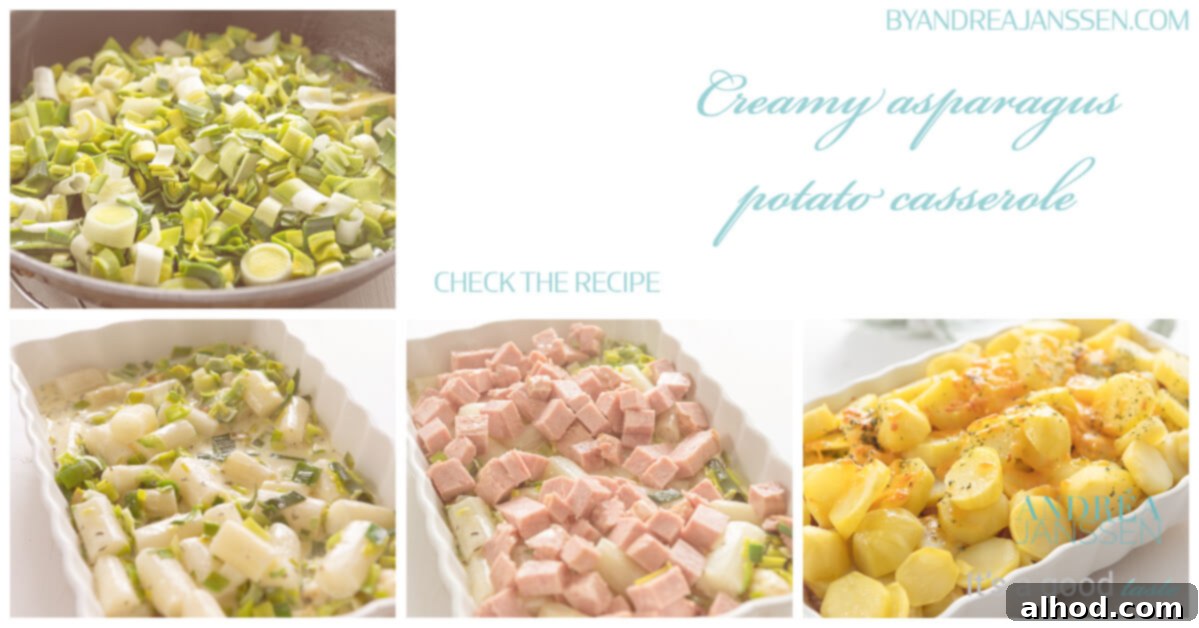
While asparagus undoubtedly plays the leading role in this comforting oven dish, its supporting cast of ingredients is equally vital in crafting its rich, harmonious flavor. Natural butter and luxurious whipped cream create a wonderfully smooth and creamy base, tenderizing the asparagus beautifully. Savory ham cubes, fresh leeks, aromatic tarragon, and bright parsley contribute layers of depth and complexity. Finally, the casserole is elegantly crowned with perfectly sliced potatoes and a blanket of grated cheese, which melts into a golden, irresistible crust.
A key technique for this casserole is cutting the asparagus into smaller, manageable pieces. This ensures that all the ingredients cook evenly and reach their perfect texture simultaneously, allowing every forkful to be a balanced blend of flavors and textures.
Choosing the Best Potatoes for Your Casserole
The type of potato you select can significantly impact the texture and overall success of your oven dish. For a creamy casserole like this one, it’s best to use a firm-boiling (or waxy) potato. These varieties hold their shape well during cooking, preventing the casserole from becoming overly mushy, while still achieving a tender bite. I personally recommend varieties like Nicola, Yukon Gold, or Red Bliss, which cook up beautifully firm yet tender.
If you wish to add an extra layer of visual appeal and a subtle earthy flavor to your potato gratin, consider using organic red-skinned potatoes. Simply scrub them clean, leave the vibrant skins on (they’re packed with nutrients and color!), and then slice them thinly. This creates a stunning color contrast and an appealing rustic touch to your dish.
In this particular creamy asparagus potato casserole, we utilize boiled potatoes, which are then sliced. The potatoes are boiled for approximately 20 minutes, or until they are cooked through but still firm enough to slice easily. To check for doneness, simply prick a potato with a fork after 20 minutes; if the fork slides in easily, they’re ready. A slight cooling period after boiling makes them much easier to handle and slice neatly, ensuring your casserole has beautifully layered potato slices.
The Secret to Sweet Leeks: Why Sauté Them First?
You might wonder why we take the extra step of frying the leeks in butter before incorporating them into the casserole. This technique serves two important purposes. First, sautéing leeks in butter brings out their natural sweetness, transforming their sometimes sharp flavor into a mellow, caramelized note that beautifully complements the asparagus. Second, pre-cooking the leeks ensures that they are perfectly tender and fully cooked when the casserole emerges from the oven, preventing any undesirable raw texture.
And speaking of leeks, do you find cleaning them a chore? It often seems like a daunting task to remove all the hidden sand and grit. However, it can be surprisingly simple! I’ve detailed a highly effective method in this blog post that will show you how to clean leeks quickly and thoroughly, ensuring they are perfectly prepared for your recipes without any extra fuss. This method works every time, making leek preparation a breeze.
Selecting the Perfect Ham for Your Asparagus Casserole
The choice of ham can significantly elevate the flavor profile of your asparagus casserole. While various types of ham are available, some are even specifically flavored to pair exquisitely with asparagus. Don’t hesitate to consult your local butcher for recommendations on such specialty hams; they are often a wonderful enhancement to spring dishes and come highly recommended.
However, if specialty ham isn’t readily available, other types of ham can certainly be used to great effect. The magic of ham with asparagus lies in the beautiful contrast between the ham’s saltiness and the asparagus’s subtle sweetness. Therefore, when selecting your ham, prioritize one with a good savory, salty flavor. In this recipe, I prefer using ham cubes over thin slices. The cubes provide a more substantial bite and a richer, more intense burst of flavor throughout the casserole, ensuring that the ham’s savory notes are present in every spoonful.
Tarragon Substitutions: Flavor Alternatives
Picture this: you’ve gathered all your ingredients, you’re ready to cook, and then you realize you’ve forgotten the tarragon! It happens to the best of us. But don’t fret; tarragon, with its distinctive light anise-like flavor, can be cleverly substituted if you’re in a pinch or simply prefer an alternative. Here are some excellent options that will still contribute a lovely aromatic quality to your casserole:
- Chervil: Often described as a milder cousin to tarragon, chervil offers a similar delicate, slightly aniseed note, making it an excellent direct substitute.
- Fennel Feathers (from the fennel tuber): The frilly greens attached to a fennel bulb carry a subtle anise flavor. Chop them finely and use them as a fresh herb.
- Fennel Seed: If using dried, crushed fennel seeds (a tiny amount, as they are potent) can mimic the anise undertones of tarragon.
- Anise Seed: Similar to fennel seed, anise seed provides a more pronounced licorice-like flavor. Use sparingly to avoid overpowering the dish.
- Oregano (Fresh or Dried): If you’re not a fan of the anise flavor altogether, oregano (either fresh or dried) offers an earthy, slightly peppery warmth that will still complement the other ingredients beautifully, creating a different but equally delicious flavor profile.
Choose the substitute that best suits your preference and what you have on hand, and your creamy asparagus potato casserole will still be a hit!
The Best Cheese for Asparagus Casserole: Subtlety is Key
In a dish where asparagus is the undeniable star, the cheese topping should complement rather than overshadow its delicate flavor. For this reason, it’s best to avoid overly sharp or pungent cheeses that might dominate the palate. Instead, opt for a mild, easily melting cheese. A young or young matured Gouda, Edam, or even a mild cheddar works wonderfully. These cheeses provide a comforting, savory layer and a beautiful golden crust without competing with the asparagus. Grate the cheese finely to ensure it melts evenly and creates a perfect golden blanket over your casserole.
Fresh vs. Dried Parsley: When to Use Which
Parsley adds a fresh, herbaceous note to many dishes, but deciding between fresh and dried can depend on when it’s added to a recipe. For this creamy asparagus potato casserole, the parsley is incorporated before the dish goes into the oven for baking. In this scenario, dried parsley is often the more practical and effective choice. Dried herbs tend to release their flavors more slowly and can withstand longer cooking times without losing their potency. While fresh parsley is wonderful for garnishing or adding at the very end of cooking to preserve its bright flavor, dried parsley will meld into the casserole during baking, contributing a consistent, subtle herbaceousness throughout the dish. However, if you only have fresh, feel free to use it, perhaps adding half before baking and the rest as a fresh garnish after, for a burst of vibrant color and aroma.
Speeding Up Your Casserole Preparation
Short on time but craving this comforting casserole? You can significantly cut down on prep time by utilizing a few readily available convenience ingredients from your supermarket. Look for pre-cooked potato slices, which eliminate the need for peeling and boiling. Many stores also offer pre-cut, sliced leeks, pre-diced ham cubes, and pre-grated cheese. By using these convenient options, you can assemble your creamy asparagus potato casserole much faster, making it an ideal choice for busy weeknights without sacrificing homemade flavor.
A Deliciously Budget-Friendly Casserole
Enjoying this rich and flavorful asparagus casserole doesn’t have to break the bank. With a few smart substitutions, you can create a delicious and budget-friendly version without compromising on taste:
- Asparagus: Instead of fresh white asparagus, opt for canned white asparagus. It’s often more economical and still provides that distinctive asparagus flavor and tender texture.
- Potatoes: Buy whole potatoes and boil them yourself. This is significantly cheaper than pre-cooked or pre-sliced options. Once boiled, simply slice them into rounds.
- Leeks: Purchase whole leeks and clean and cut them into thin rings yourself. This is a simple task that saves money, and you can follow the easy method described in this blog post for quick and efficient cleaning.
- Ham: Instead of specialty ham from the meat counter, look for canned ham or a more affordable deli ham that can be cubed.
By making these simple adjustments, this budget-friendly version of the creamy asparagus potato casserole can cost as little as €2.00 per person, proving that delicious, homemade meals can indeed be affordable.
Make-Ahead Magic: Preparing Your Casserole in Advance
One of the fantastic features of this creamy asparagus potato casserole is its suitability for meal prepping. If you have a busy day ahead or simply want to minimize cooking time on the day of serving, you can easily prepare almost the entire recipe the night before (or up to two days in advance!). Simply follow all the instructions up to the point where the dish needs to be placed in the oven. Once assembled, cover the baking dish tightly with plastic wrap and store it in the refrigerator.
When you’re ready to bake, remember an important step for safety and best results: remove the casserole from the refrigerator and let it sit at room temperature for 15 to 30 minutes while your oven preheats. This gradual temperature adjustment is crucial; putting a cold baking dish directly into a hot oven can cause thermal shock, potentially leading the dish to crack or shatter. By allowing it to come closer to room temperature, you ensure an even bake and protect your cookware.
Post-Cooking Storage and Freezing Tips
Should you be lucky enough to have leftovers of this delectable asparagus casserole, proper storage ensures you can enjoy them later. Promptly cool the casserole after serving, then cover it tightly with plastic wrap or transfer it to an airtight container. It will keep beautifully in the refrigerator for up to 2 days.
For longer storage, this dish also freezes exceptionally well. Once completely cooled, portion the casserole into airtight freezer-safe containers or wrap individual portions securely in foil and then place them in freezer bags. Stored correctly, the creamy asparagus potato casserole can be kept in the freezer for up to 1 month. When reheating from frozen, it’s best to thaw it overnight in the refrigerator first, then warm it gently in the oven until heated through.
More Asparagus Inspiration
If you’re eager to explore more ways to enjoy the versatile flavors of asparagus, here are some other delightful recipes you might love:
- Mustard soup with smoked salmon and asparagus
- Asparagus soup with ham and egg
- Ovenbaked salmon with asparagus and tomatoes
- Spaghetti with asparagus, ham and a poached egg
- Grilled asparagus with Boursin and prosciutto

Did you make this delicious recipe? Tag #byandreajanssen via Instagram! I love to see what your creation looks like and regularly share the most beautiful photos of you! Did you like this recipe? Then leave a rating on the recipe card! Your feedback helps other home cooks and me enormously.
Need more inspiration?
- You can find video recipes on my YouTube channel.
- And don’t forget to save the recipes on Pinterest, so you can easily find them again next time!
📖 Recipe
RECIPE CARD

 Andréa
Pin Recipe
Equipment
-
A conventional oven is used. When using a convection oven (with air fan) decrease the temperature with 30 °F / 20 °C
-
Oven dish 20 x 30 cm
Ingredients
- 1 kg potatoes , firm-boiling
- 1 teaspoon salt
- 500 grams white asparagus
- 3 tablespoons butter
- 3 leeks, cut into thin rings
- 200 ml cream
- ½ tablespoon tarragon
- 75 grams cheese, grated, young (matured)
- 1 tablespoon parsley, minced
- ½ pound ham
All my recipes are written both in Metric (gram / ml) and US Customary (cups / pounds). Here you can select which type of amount you would like to see.
Instructions
-
Preheat the oven to 200 degrees Celsius (400°F).
-
Grease an oven dish (approximately 20×30 cm) with 1 tablespoon of butter.
-
Peel the potatoes and cut them in half (or into quarters if very large). Rinse them under running water and place them in a large pan.
-
Fill the pan with enough water so that the potatoes are covered by about 1 cm (½ inch).
-
Add 1 teaspoon of salt to the water.
-
Bring the water to a boil and cook the potatoes for 20 minutes, or until they are tender when pierced with a fork. If not, extend the cooking time by 3 minutes and check again. Drain the potatoes and set them aside to cool slightly before slicing.
-
While the potatoes cook, peel the white asparagus using a peeler, starting about 2 cm from the tip and working downwards. Refer to the tips above for the best peeling technique. Also, cut off and discard the hard, woody bottom ends of the asparagus (about 2 cm from the base).
-
Slice the peeled asparagus into 3 cm (about 1.2 inch) pieces.
-
In a large frying pan or skillet, melt the remaining 2 tablespoons of butter over medium heat.
-
Add the thinly sliced leeks to the melted butter and sauté for about 3 minutes until slightly softened and fragrant.
-
Pour the cream into the pan with the leeks and stir well to combine.
-
Bring the mixture to a gentle simmer and cook for 5 minutes, stirring occasionally, allowing the sauce to slightly thicken.
-
Add the sliced asparagus pieces and tarragon to the frying pan. Mix thoroughly and continue to simmer for another 5 minutes, allowing the asparagus to tenderize and absorb the flavors.
-
Now, taste the vegetable mixture (seasoning too early can make it overly salty as moisture evaporates). Season with salt and freshly ground black pepper to taste, adjusting as needed.
-
Evenly spoon the creamy leek and asparagus mixture over the bottom of your greased baking dish, creating a flavorful base.
-
If you didn’t buy pre-cubed ham, cut your ham into small, bite-sized cubes. Scatter these ham cubes evenly over the leek and asparagus mixture in the baking dish.
-
Carefully slice the cooled, boiled potatoes into uniform rounds. Arrange these potato slices neatly over the ham and vegetable mixture, overlapping them slightly to create a continuous layer. Sprinkle the grated cheese generously over the potatoes, followed by the minced parsley.
-
Bake the assembled casserole in the preheated oven for 15 minutes, or until the cheese is melted, bubbly, and golden brown, and the dish is heated through. Serve hot and enjoy!
Nutrition
Tried this recipe?
Let us know how it was!