The Ultimate Guide to Non-Stick Pan Care: Extend Your Cookware’s Lifespan
Non-stick frying pans have revolutionized home cooking, making our culinary adventures smoother, healthier, and significantly easier to clean. Their ability to release food effortlessly, often with minimal oil or butter, makes them a favorite in kitchens worldwide. However, this convenience comes with a delicate nature. The very coating that makes these pans so appealing is also susceptible to damage, which can lead to reduced performance, difficult cleaning, and ultimately, an unusable pan. But what if you could significantly extend the life of your non-stick cookware by adopting a few simple yet crucial care practices? This comprehensive guide will walk you through the essential steps to keep your non-stick pans performing their best for years to come.
Understanding Your Non-Stick Cookware
Before diving into care routines, it’s helpful to understand what makes non-stick pans work. Most traditional non-stick surfaces rely on a polymer called Polytetrafluoroethylene (PTFE), commonly known by the brand name Teflon. Newer alternatives include ceramic coatings and various composite materials. While all these coatings provide a slick surface, they are inherently more delicate than bare metal surfaces like cast iron or stainless steel. They are designed for convenience, not for aggressive use, extreme temperatures, or rough handling. Recognizing this fundamental difference is the first step towards proper pan maintenance.
The Art of Gentle Cleaning for Non-Stick Pans
One of the most common ways non-stick coatings get damaged is during cleaning. While the idea of a quick scrub with a scouring pad might be tempting for stubborn food residues, it’s a direct path to ruin for your non-stick pan. The abrasive nature of scouring pads, steel wool, or harsh brushes can easily scratch and strip away the delicate non-stick layer, compromising its effectiveness and potentially exposing the underlying metal.
Preventing Damage During Cleanup:
- Cool Down First: Always allow your non-stick pan to cool completely before washing. Submerging a hot pan in cold water can cause thermal shock, which may lead to warping or even damage to the non-stick coating over time. Patience is key here.
- Warm Water and Mild Soap: The best approach for daily cleaning is warm water, a small amount of mild dish soap, and a soft sponge, cloth, or a dedicated nylon brush designed for non-stick surfaces. Most food will slide right off with minimal effort.
- Soaking for Stubborn Residues: For particularly stubborn bits of food that refuse to budge, fill the pan with warm water and a drop of dish soap, then let it soak for 15-20 minutes. This will soften the residue, allowing you to gently wipe it away afterwards.
- The Salt and Oil Method: As a natural and effective alternative for baked-on food, you can create a gentle abrasive paste using salt and oil. Sprinkle a teaspoon of coarse salt into the pan, add a few drops of cooking oil, and then gently scrub with a paper towel or soft cloth. The salt acts as a mild abrasive while the oil helps lift the residue. Rinse thoroughly afterward.
- Avoid the Dishwasher: While some manufacturers claim their non-stick pans are “dishwasher safe,” it’s generally best to hand wash them. The harsh detergents and high heat cycles of a dishwasher can degrade the non-stick coating and dull the pan’s exterior finish over time, significantly shortening its lifespan.
Mastering Heat Management with Non-Stick Cookware
Perhaps the most critical factor in preserving your non-stick pan’s longevity is proper heat management. Non-stick coatings, especially PTFE-based ones, are simply not designed for high heat. Exposing them to excessively high temperatures can have severe consequences, leading to both performance degradation and potential health concerns.
The Dangers of Overheating:
- Coating Degradation: When a non-stick pan gets too hot, the coating can start to break down at a molecular level. This leads to the non-stick properties diminishing rapidly, causing food to stick and making cleaning a nightmare.
- Chemical Fumes: For PTFE coatings, extreme overheating (typically above 500°F / 260°C) can cause the release of potentially harmful fumes. While this usually requires leaving an empty pan on high heat for an extended period, it’s a risk worth avoiding entirely.
- Warping: Sudden, extreme changes in temperature or prolonged high heat can cause the pan’s base to warp, creating an uneven cooking surface.
Optimal Heat Practices:
- Medium to Medium-Low Heat is Key: Non-stick pans are best suited for cooking applications that require moderate temperatures. Think scrambled eggs, pancakes, delicate fish, sautéing vegetables, or gently reheating leftovers. For most cooking tasks, a medium heat setting will provide ample temperature without risking damage to the coating.
- Never Heat an Empty Pan: Always add a small amount of oil, butter, or food to your non-stick pan before placing it on the heat. Heating an empty pan, even on medium heat, can cause the temperature of the non-stick surface to rise very quickly, exceeding its safe operating range before you even realize it.
- Not for Searing or Browning: This is a crucial distinction. If your recipe calls for high-heat searing to create a deep, caramelized crust on meats or vegetables, a non-stick pan is the wrong tool for the job. The temperatures required for effective browning are typically too high for non-stick coatings, which will inevitably lead to damage.
- Choose the Right Cookware for High Heat: For high-heat tasks like searing steaks, achieving a crispy skin on poultry, or stir-frying at intense temperatures, opt for alternative cookware. Cast iron, stainless steel, or carbon steel pans are designed to withstand and excel under high heat, providing superior browning and caramelization without risk of damage.
- Utensil Choice: Always use heat-resistant silicone, wooden, or plastic utensils with non-stick pans. Metal spatulas, spoons, or tongs can easily scratch and scrape the coating, leading to irreversible damage.
The Secrets to Safe Non-Stick Pan Storage
Even after proper cleaning and careful cooking, many people inadvertently damage their non-stick pans during storage. The common practice of stacking pans directly on top of each other, especially without any protective barrier, is a silent killer for non-stick coatings.
Protecting Your Pans in Storage:
- The Scratching Hazard: When pans are stacked, the hard metal underside of the upper pan can rub and grind against the delicate non-stick surface of the pan below. This friction creates microscopic scratches that eventually deepen, leading to chipped, flaking, or entirely compromised coatings. Even the smallest scratch can be a starting point for further degradation.
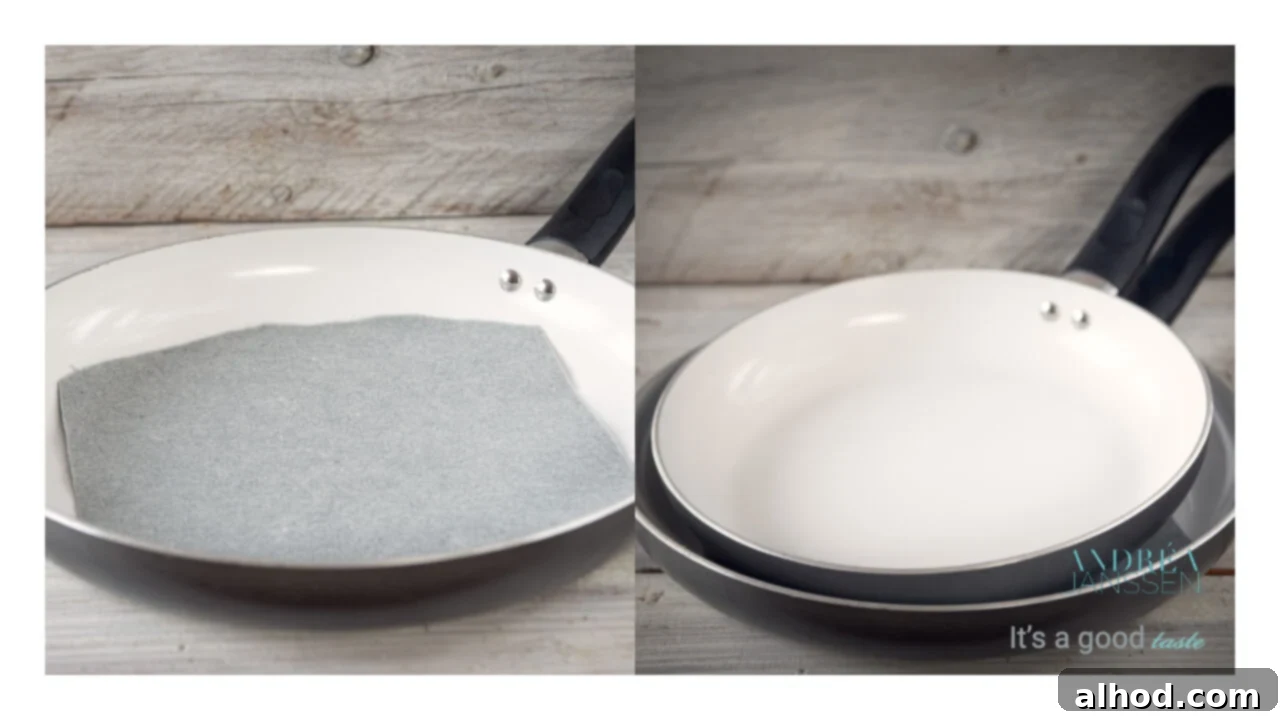
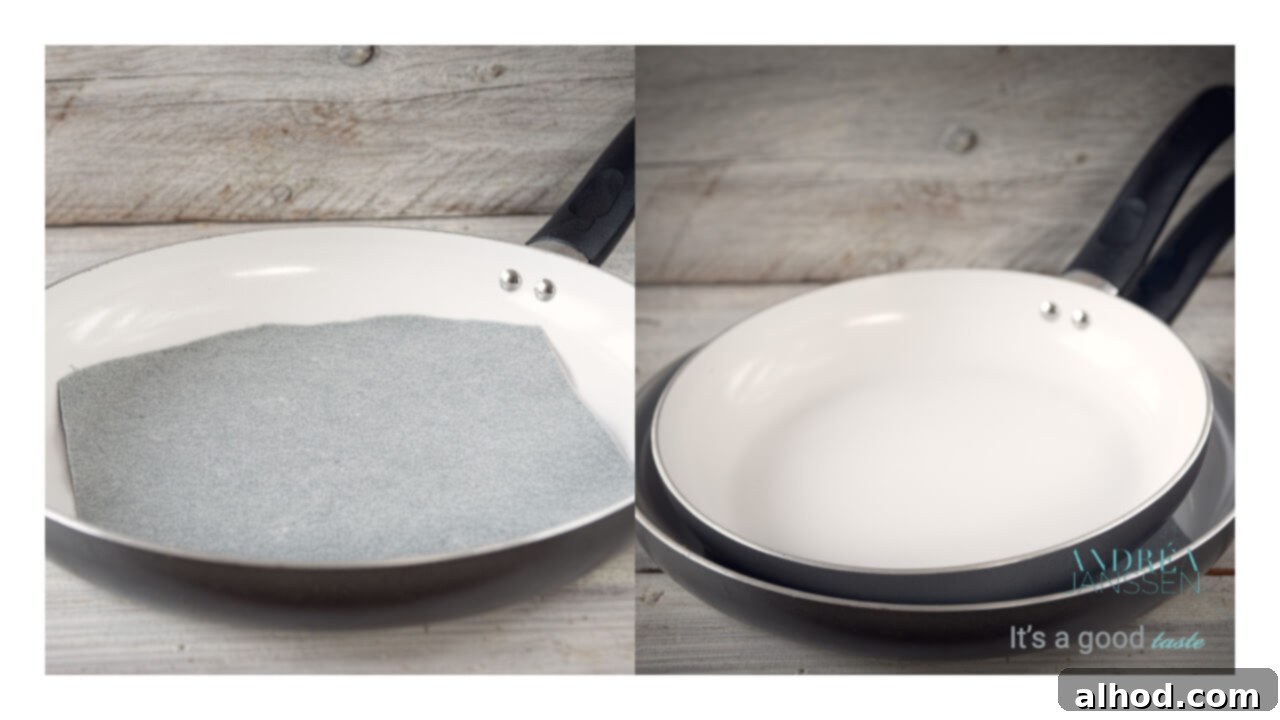
- Pan Protectors Are Your Best Friend: This is arguably the simplest and most effective solution. You can purchase pan protectors, which are typically made of felt or silicone, designed to cushion your pans when stacked. Alternatively, you can easily make your own by cutting pieces of felt or even thick paper towels into circles the size of your pan’s interior. After cleaning, place one of these protectors inside each pan before stacking. This creates a soft barrier that prevents metal-on-metal contact.
- Vertical Storage Solutions: If space allows, consider storing your pans vertically using a pan organizer rack. These racks typically hold pans on their sides, preventing any contact between the cooking surfaces. Similarly, hanging racks or pegboards can keep pans separate and easily accessible.
- Avoid Overloading: If you must stack, ensure the stack isn’t too high or overloaded with heavy items that could press down and create more friction.
- Store Lids Separately: Pan lids, especially those with metal rims, can also cause scratches. Store them separately or use lid organizers.
And it also looks nice, right? Keeping your kitchen organized and your cookware protected often goes hand-in-hand with smart storage solutions.
When to Replace Your Non-Stick Pan
Despite your best efforts, non-stick pans do have a finite lifespan. If you notice persistent sticking, significant scratching, flaking, or bubbling of the coating, it’s time to replace your pan. A damaged non-stick surface not only performs poorly but can also pose potential health risks if the coating continues to flake into your food.
Conclusion: Investing in Longevity
Non-stick frying pans are an invaluable tool for healthy and convenient cooking. By understanding their unique characteristics and adopting these simple yet effective care practices, you can dramatically extend their life and maintain their excellent performance. From gentle cleaning and mindful heat management to smart storage solutions, each step contributes to preserving the integrity of that precious non-stick surface. Treat your non-stick pans with the care they deserve, and they will continue to serve you well, making your time in the kitchen more enjoyable and less stressful for years to come.
PS. And if you are in need of a new pan or want even more information about frying pans, you can find some great examples in this post.