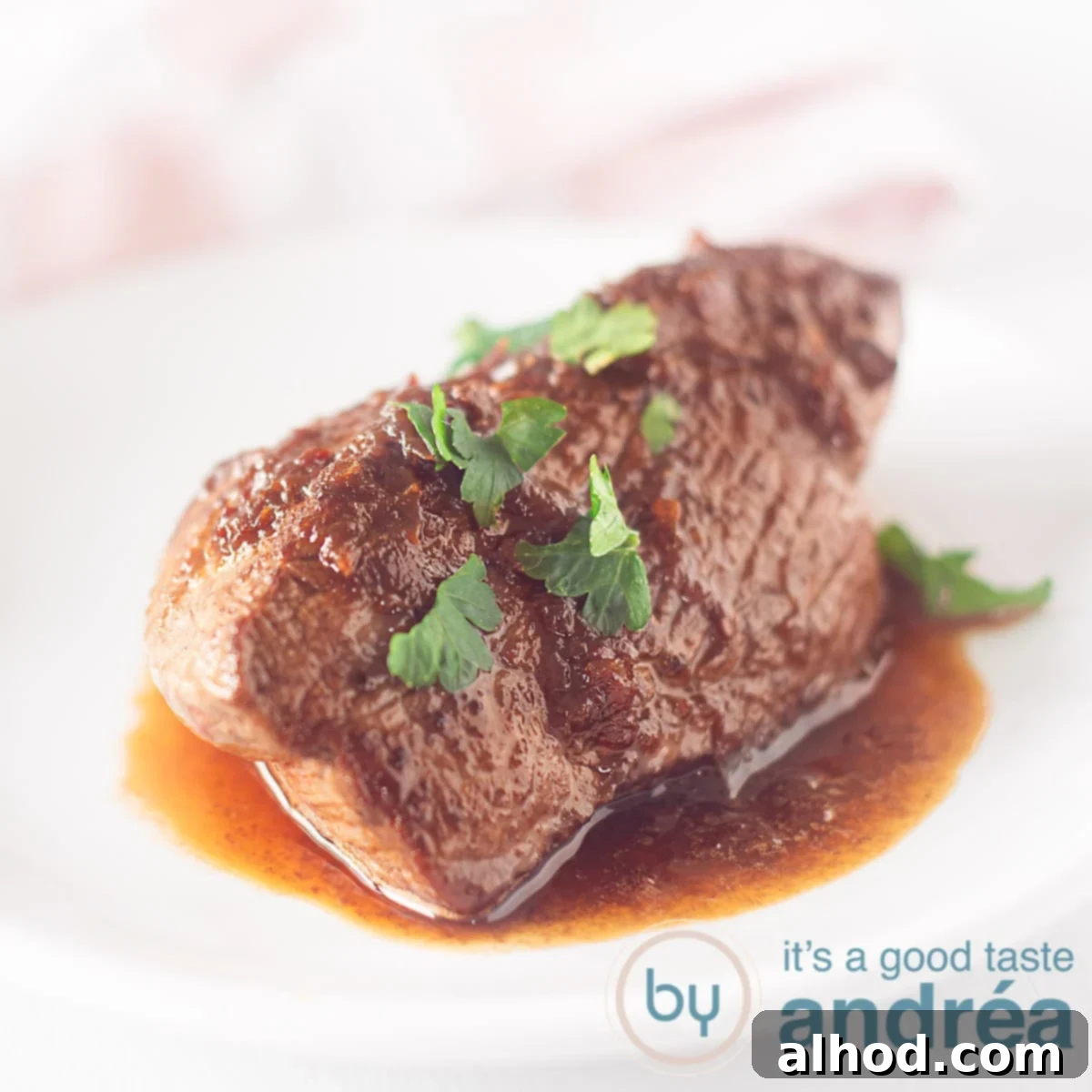
Mastering Loetje’s Famous Dutch Steak Bali: The Ultimate Tenderloin Recipe
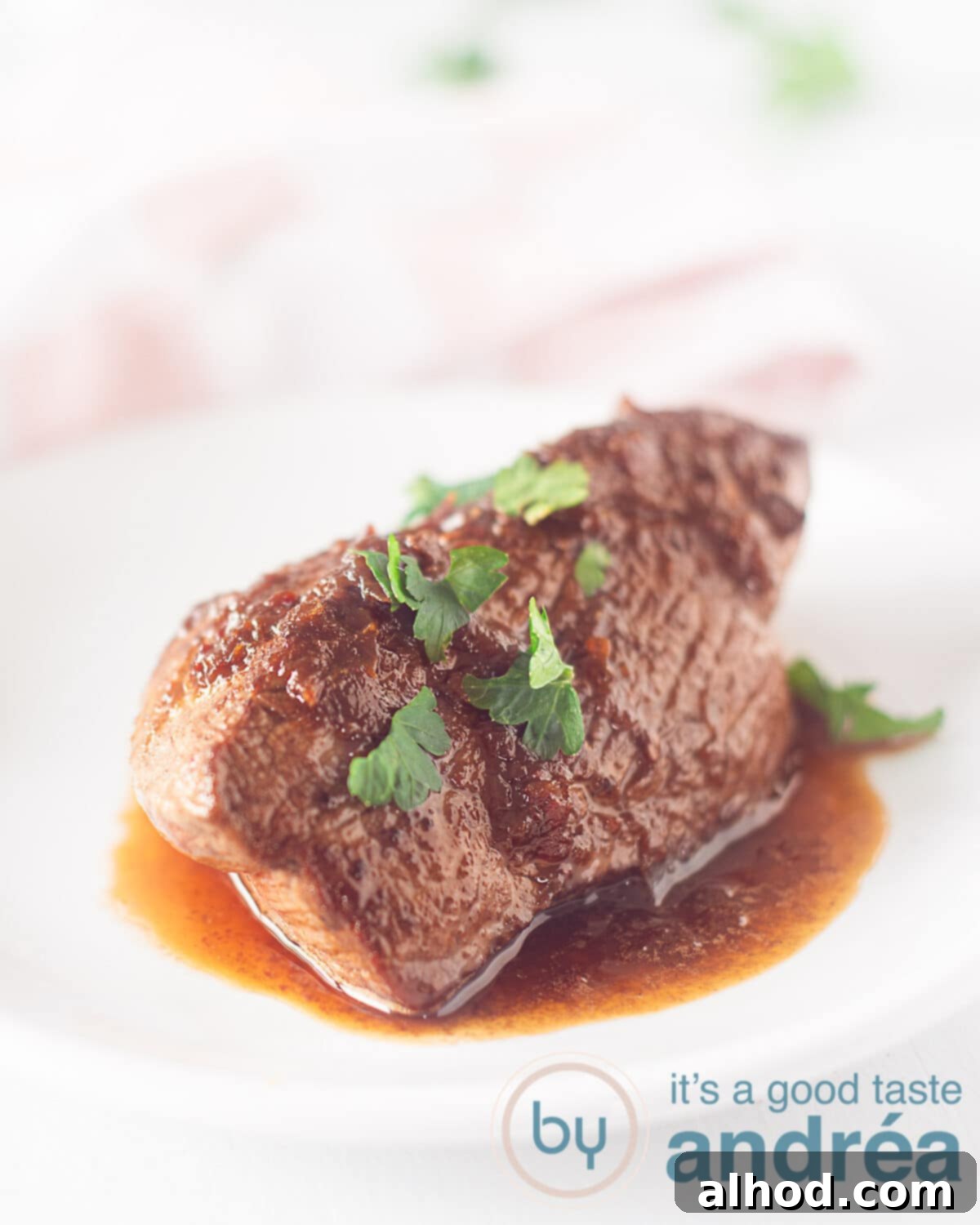
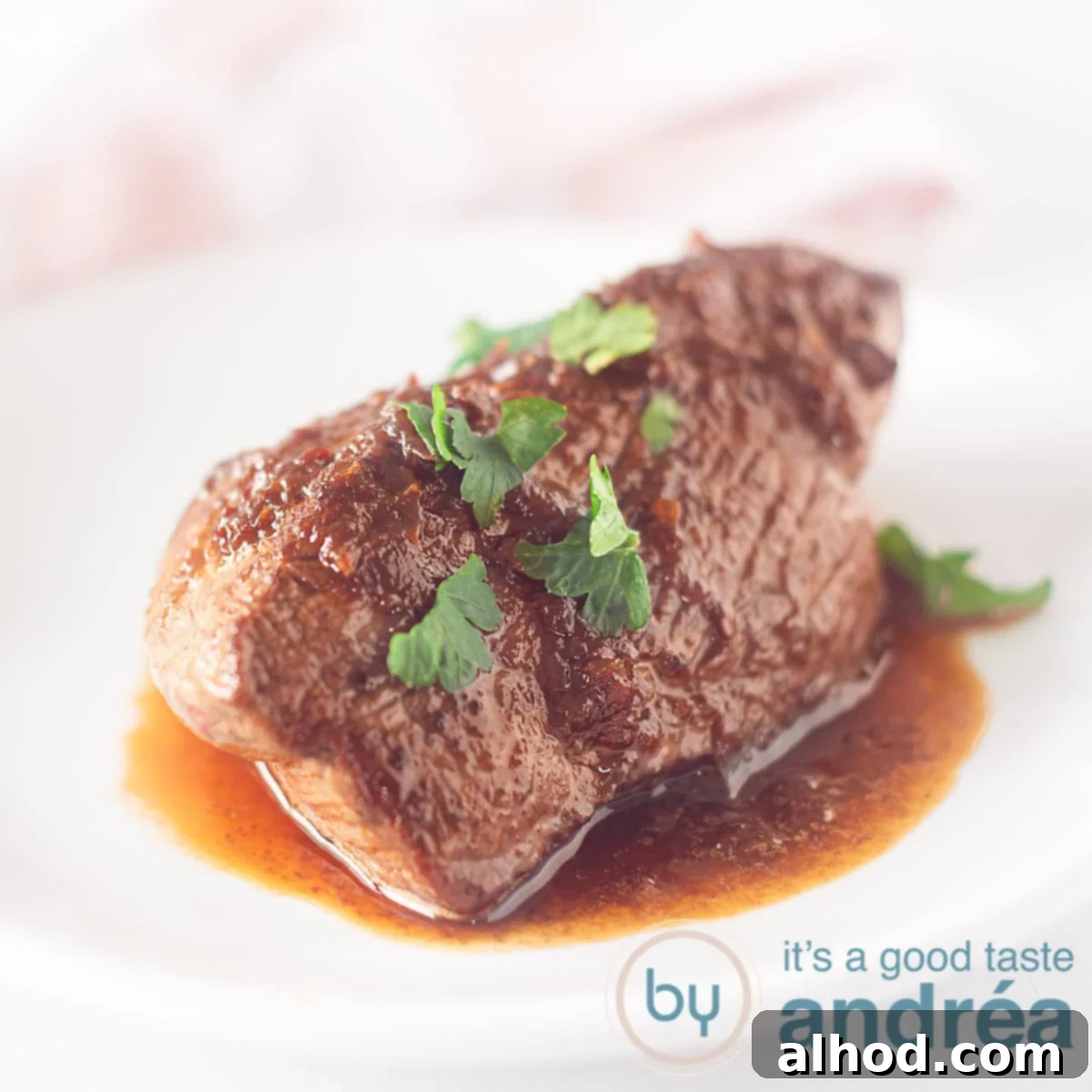
Prepare to tantalize your taste buds with Biefstuk Bali, a dish so exquisitely flavorful yet incredibly simple to prepare. This recipe is your gateway to experiencing the legendary steak served at Restaurant Loetje, an iconic culinary institution in the Netherlands. Loetje’s steak is famous for a reason, and once you’ve savored this tender beef tenderloin coated in its rich, spicy gravy, you’ll understand why. Get ready to scrape every last drop of that delectable sauce from your plate – it’s truly that good. This isn’t just a meal; it’s an unforgettable culinary journey to the heart of Dutch comfort food, perfected for your home kitchen.
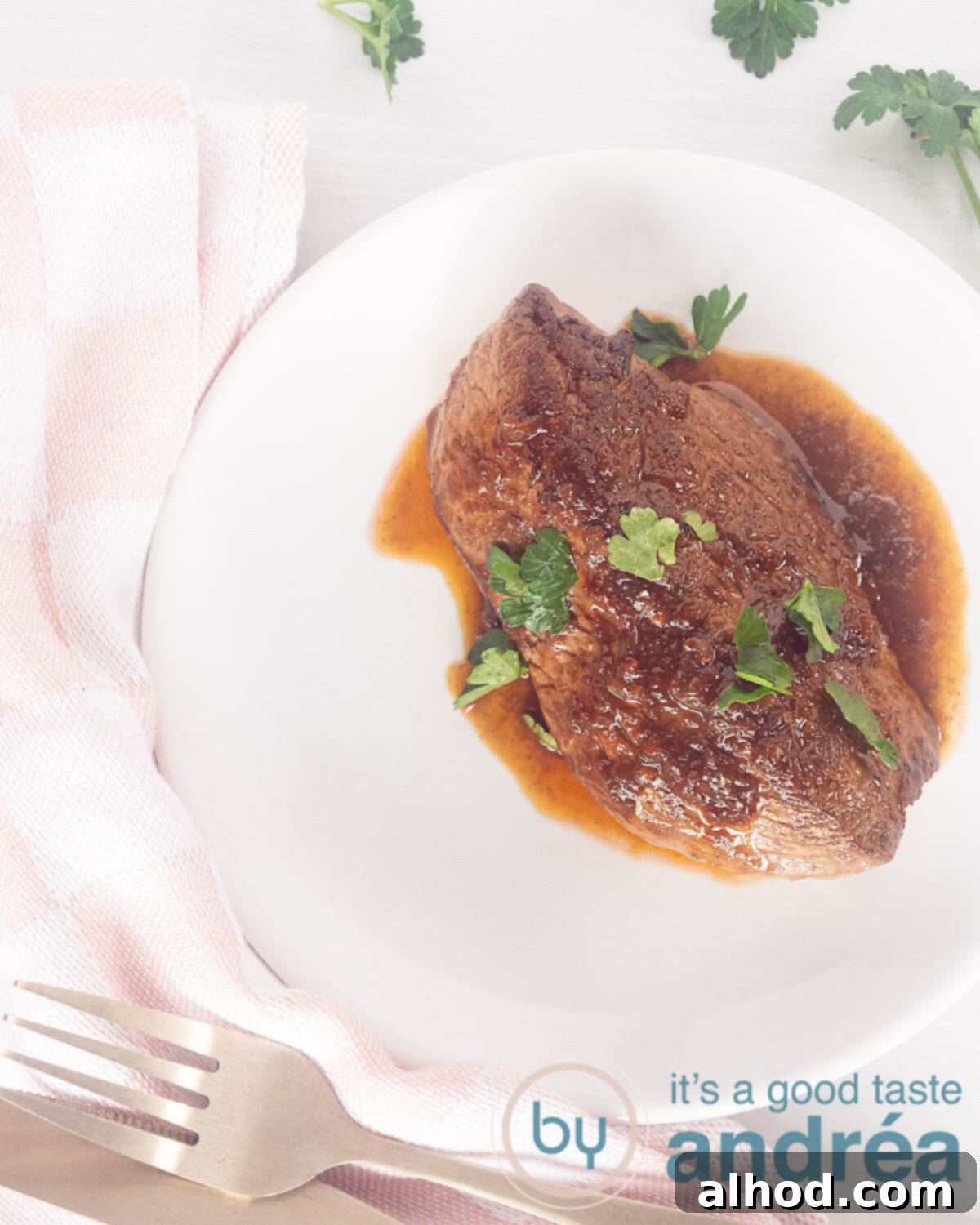
The Legend of Loetje’s Steak Bali
This exceptional recipe is a homage to Loetje’s famous steak, a culinary phenomenon that originated in the Netherlands. Back in the 1970s, the owner of a simple Amsterdam cafe named Loetje started serving this unique steak. It quickly garnered a cult following, with people traveling from all corners of the country just to experience its distinct flavor. What began as a humble cafe dish transformed into a national sensation, eventually leading to a chain of popular restaurants across the Netherlands. By following this carefully crafted recipe, you can recreate that authentic Loetje experience right in your own kitchen, bringing a piece of Dutch culinary history to your dining table.
But what exactly is the secret behind this iconic Dutch steak? It boils down to a few key elements that, when combined, create a truly unforgettable dish:
- Premium Beef Tenderloin: The foundation of any great steak is the cut of meat. Loetje famously uses beef tenderloin, known for its exceptional tenderness and fine texture. This ensures a melt-in-your-mouth experience with every bite.
- Margarine for Browning: While butter is often the go-to for frying steak, Loetje’s secret lies in using margarine. Margarine contains less water than butter, which allows for a higher smoke point and a more consistent, rich brown gravy. This unique choice contributes significantly to the steak’s signature flavor and the luscious sauce.
- Dynamic Frying Technique: Instead of letting the steak sit untouched, the tenderloin is kept moving in the pan. This technique ensures even browning on both sides, creating a perfect crust while locking in the juices.
- Perfect Doneness: Loetje’s steak is traditionally served medium-rare. This level of doneness maximizes the tenderloin’s succulence and flavor, making it incredibly juicy and satisfying.
- The Signature Gravy with Sambal: And then, of course, there’s the gravy – the real star of the show. After frying the steak, an Indonesian chili paste, specifically Sambal Oelek, is added to the skillet. This paste, known for its mild yet distinct spicy kick, transforms the pan drippings into a wonderfully flavorful sauce that you’ll want to savor to the very last drop. Many aficionados, myself included, love to dip slices of white bread into this irresistible gravy!
What You’ll Need for Beef Steak Bali
To embark on your journey to creating this incredible Beefsteak Bali, you only need a handful of high-quality ingredients. The precise quantities for each ingredient can be found in the detailed recipe card at the bottom of this blog post. Here’s a closer look at the essential components:
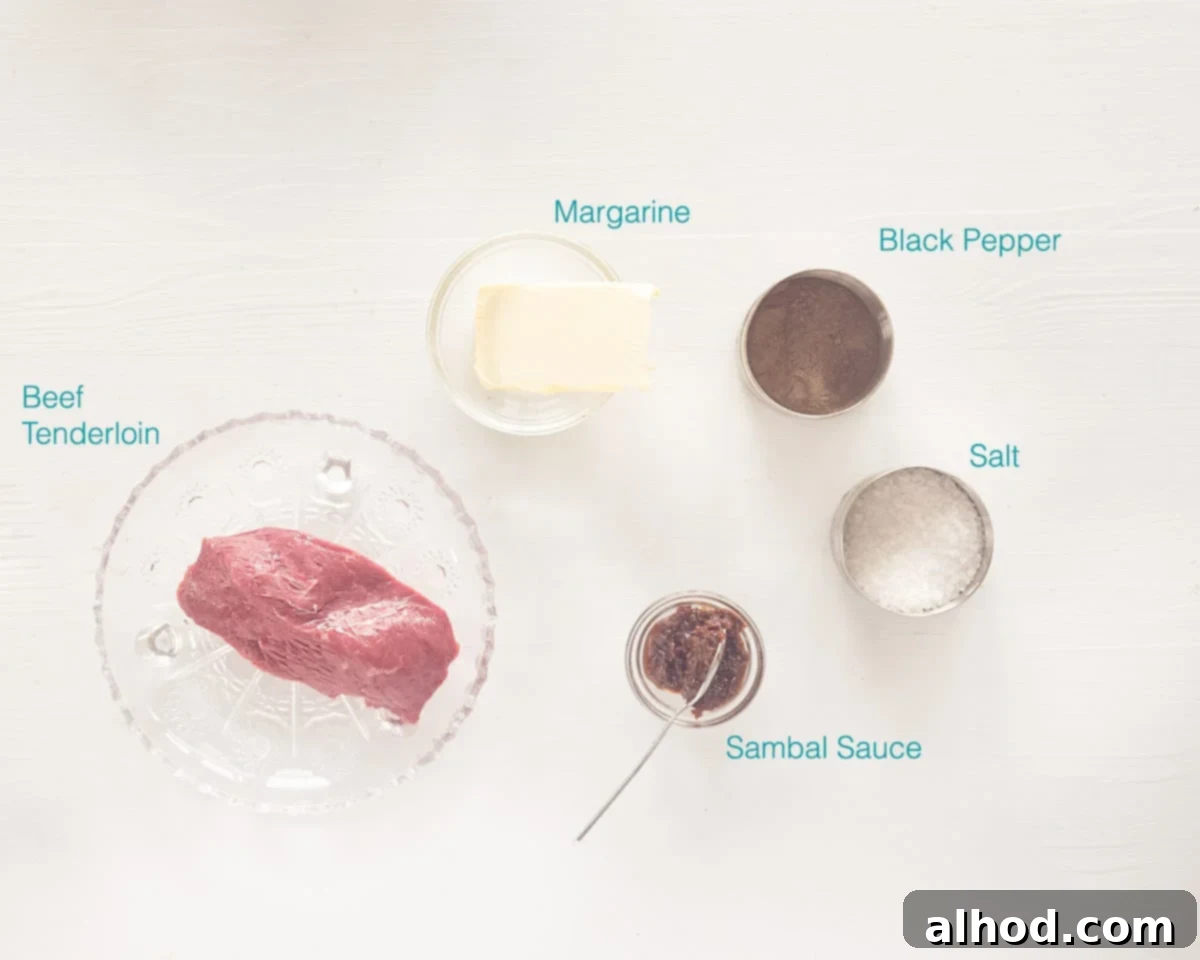
- Beef Tenderloin: This is the prime cut for a reason. The tenderloin is the most tender and arguably the most prized part of the cow, offering an unparalleled buttery texture. While tenderloin provides the ultimate experience, you do have options. You can also use round steak, which is slightly less tender but still a good choice, or a regular steak, which will have more chew and texture. Keep in mind that the price typically reflects the tenderness, with tenderloin being the most expensive and regular steak being the most budget-friendly. Whichever you choose, ensure it’s a good quality cut for the best flavor.
- Margarine: As highlighted, margarine is crucial for achieving that authentic Loetje gravy. Its lower water content compared to butter allows it to brown beautifully without excessive foaming, yielding a richer, deeper flavored sauce. For the best results, opt for a full-fat stick margarine. However, if you absolutely prefer or only have butter on hand, you can substitute it, but be aware that the gravy might differ slightly in texture and color.
- Sambal Oelek: This Indonesian chili paste is the secret ingredient that infuses the gravy with its characteristic mild heat and depth of flavor. Sambal Oelek is primarily ground fresh red chilies with a little vinegar and salt, offering a clean, bright spice without being overwhelmingly hot. If you enjoy a noticeable kick, a tablespoon (or even two, like I do!) is perfect. If you’re new to sambal or prefer less spice, start with a smaller amount and add more to taste. For those who crave intense heat, you might consider a hotter variety of sambal, though Oelek is typically the traditional choice for this recipe. You can usually find Sambal Oelek in the international aisle of most grocery stores or Asian markets.
- Salt and Pepper: Simple yet essential. Good quality coarse sea salt and freshly ground black pepper are all you need to perfectly season your tenderloin, enhancing its natural flavors.
How to Make Authentic Dutch Steak Bali
Creating this delicious Dutch Steak Bali is surprisingly straightforward, and with our detailed step-by-step guide, you’ll be serving a restaurant-quality meal in no time. For a comprehensive recipe with precise ingredient amounts and an easy-to-print format, please refer to the recipe card located at the very end of this blog post.
- Bringing to Room Temperature & Seasoning:
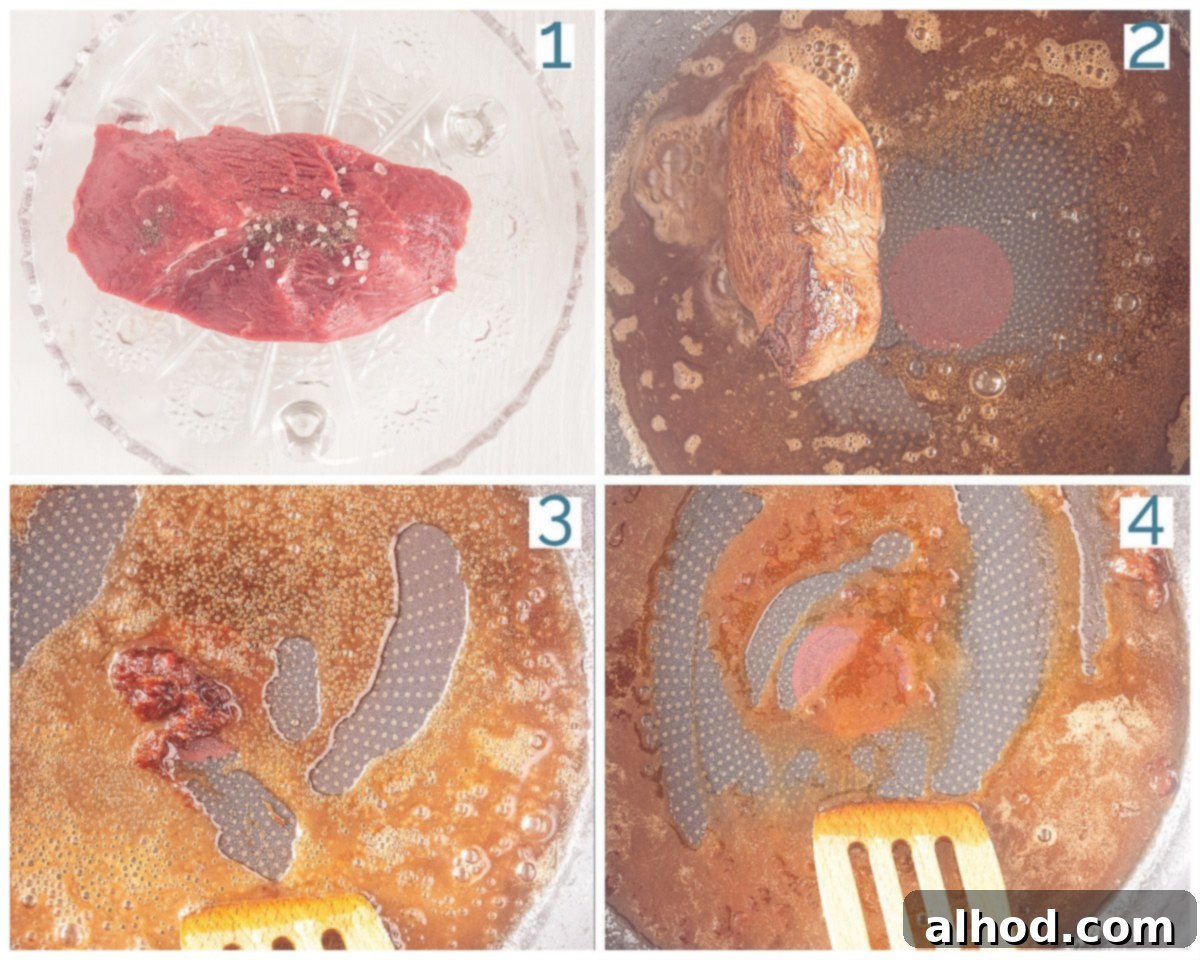
The first crucial step for a perfectly cooked steak is to remove it from the refrigerator at least 30 minutes before you plan to cook it. This allows the meat to come closer to room temperature, ensuring more even cooking throughout and preventing the outside from overcooking while the inside remains cold. Once at room temperature, pat the steak completely dry with paper towels. This is vital for achieving a good sear. Season one side generously with freshly ground black pepper and both sides with sea salt. The salt will draw out moisture, but then reabsorb into the meat, enhancing flavor. - Frying Your Steak to Perfection:
Melt the margarine in a heavy-bottomed pan or cast-iron skillet over high heat. Wait until the foam subsides and the margarine begins to turn a light golden brown – this indicates it’s hot enough for searing. Carefully place the seasoned steak into the hot pan. A unique aspect of Loetje’s technique is to continuously move the steak back and forth in the pan. This constant movement helps to brown the tenderloin evenly on both sides, creating a beautiful crust through the Maillard reaction, which develops complex, savory flavors.
Now comes the critical part: achieving your desired doneness. There’s a handy trick using your hand to gauge how cooked your steak is.- Rare: Open your palm and relax your hand. With the index finger of your other hand, press the fleshy area between your thumb and wrist. This soft, yielding sensation is how a rare steak should feel when gently pressed in the pan. It should be soft but not completely spring back.
- Medium Rare: Gently touch the tip of your thumb to the tip of your middle finger. Now, feel the same fleshy area between your thumb and wrist with your other hand. It will feel firmer and spring back slightly. This is the ideal texture for a medium-rare steak, which is traditionally preferred for Loetje’s.
- Well-done: Bring the tip of your pinky finger to the tip of your thumb. Press the fleshy area once more. The meat will feel quite firm and offer little to no spring-back. This is the indicator for a well-done steak.
Adjust your cooking time based on your preferred doneness, typically 2 minutes per side for rare, 3 minutes per side for medium-rare, and 4+ minutes per side for well-done, adjusting for steak thickness.
- The Essential Resting Period:
Once your steak has reached your desired doneness, immediately remove the tenderloin from the pan. Wrap it loosely in aluminum foil to create a warm tent. Allow the meat to rest for at least 3 to 5 minutes (or even up to 10 minutes for thicker cuts). This resting period is absolutely crucial. It allows the juices, which have been pushed to the center of the steak during cooking, to redistribute throughout the meat. The result is a much juicier, more tender, and flavorful steak. Skipping this step often leads to dry, tough meat. - Crafting the Famous Gravy:
While the steak rests, it’s time to make the legendary gravy. Return the pan to the heat if it has cooled down. Add a tablespoon of hot water or a splash of beef broth to the skillet. Use a wooden spatula to scrape up all the flavorful brown bits (known as “fond”) from the bottom of the pan. These caramelized bits are packed with intense flavor and are essential for a rich gravy. Once the fond is loosened, stir in the Sambal Oelek. Mix thoroughly until the sambal is fully incorporated into the sauce. This quick process transforms the pan drippings into the iconic, spicy, and savory gravy that perfectly complements the tenderloin. - Serve Immediately:
Unwrap your rested steak from the aluminum foil and place it onto your serving plate. Generously pour the warm, flavorful sambal gravy over the steak. Serve immediately with your chosen accompaniments.
Serving Suggestions for Your Dutch Steak Bali
Loetje’s Steak Bali is a complete experience on its own, but it truly shines when paired with traditional Dutch accompaniments that complement its rich flavors. Here are the classic ways to serve this magnificent dish:
- Fries and Mayonnaise: This is a golden combination and a true Dutch staple. Serving a delicious, tender steak with a generous side of fresh, crispy fries and a dollop of creamy Dutch mayonnaise (often a bit sweeter than American mayo) is simply divine. You can even dip your fries directly into the luscious gravy for an extra layer of flavor!
- White Bread for Dipping: For the ultimate authentic experience, you absolutely must serve your steak with a few slices of soft white bread. This is not just a side; it’s an integral part of the meal. The bread is perfect for soaking up every last drop of that irresistible sambal gravy, ensuring none of its deliciousness goes to waste. Honestly, with this combination, you truly don’t need much else!
- Simple Green Salad: To add a touch of freshness and balance the richness of the steak and gravy, a light green salad with a simple vinaigrette can be a wonderful addition.
- Steamed Vegetables: Green beans or asparagus, lightly steamed and seasoned, offer a healthy and flavorful counterpoint to the dish.
Whichever way you choose to serve it, this Dutch Steak Bali promises a memorable and satisfying meal.
Did you make this delicious recipe? Tag #byandreajanssen via Instagram! I absolutely love seeing your culinary creations and frequently share the most beautiful photos from my followers! Did you enjoy this recipe? Then please consider leaving a rating on the recipe card below! Your valuable feedback helps not only me but also countless other home cooks searching for their next favorite meal.
Need more culinary inspiration?
- You can find a treasure trove of video recipes on my YouTube channel, perfect for visual learners.
- And don’t forget to save your favorite recipes on Pinterest! This makes it incredibly easy to find them again the next time you’re ready to cook.
📖 Recipe
RECIPE CARD

Andréa
Pin Recipe
4
minutes
10
minutes
14
minutes
Dinner
Dutch
4
persons
667
kcal
Equipment
-
frying pan
-
aluminum foil
Prevent your screen from going dark
Ingredients
-
2
pounds
Beef tenderloin steak,
4 pieces, allow to reach room temperature for 30 minutes before cooking. -
Salt -
ground black pepper -
½
pound
Margarine -
2
tablespoons
Sambal Oelek
All my recipes are written both in Metric (gram / ml) and US Customary (cups / pounds). Here you can select which type of amount you would like to see.
US Customary
Instructions
-
Pat the beef tenderloin steaks dry with paper towels to ensure a good sear. Season one side with both salt and freshly ground black pepper, and the other side with salt only.2 pounds Beef tenderloin steak,
Salt,
ground black pepper -
Melt the margarine in a heavy-bottomed pan or cast-iron skillet over high heat. Once the foam dissipates and the margarine begins to turn a light brown color, carefully add the seasoned steaks to the pan.½ pound Margarine -
Sear the steaks over high heat, continuously moving them back and forth in the pan to ensure even browning. After a good sear on both sides, reduce the heat to medium. -
Continue to fry the steaks, flipping them to cook each side. For a ‘rare’ steak, cook for approximately 2 minutes per side. For the traditional ‘medium rare’ doneness, aim for about 3 minutes per side. If you prefer ‘well-done’, cook for 4 minutes or more per side. Refer to the ‘Steak doneness’ note below for a helpful hand test! * -
Once cooked to your liking, remove the steaks from the pan and loosely wrap them in aluminum foil. This resting period is crucial for the juices to redistribute, ensuring a tender and moist steak. Let them rest for at least 3 to 5 minutes. -
To make the signature gravy, add a tablespoon of hot water (or beef broth) to the pan where you cooked the steaks. Use a wooden spatula to scrape up all the flavorful brown bits (fond) from the bottom. These bits are essential for a rich sauce. Stir in the Sambal Oelek until thoroughly combined.2 tablespoons Sambal Oelek -
Carefully unwrap the rested steak from the aluminum foil and place it onto a warm serving plate. Generously pour the rich, spicy sambal gravy over the steak. -
Serve immediately and prepare to enjoy a truly authentic Dutch Steak Bali experience!
Notes
Beef tenderloin is unequivocally the most tender and desirable cut for this recipe, renowned for its luxurious texture. While it’s the premium choice, you can also opt for round steak, which offers a good balance of tenderness and value, or a regular steak if you prefer a more robust texture and a more budget-friendly option. Regardless of the cut, ensuring it’s of good quality will significantly impact the final flavor. Always allow your chosen steak to come to room temperature (at least 30 minutes out of the fridge) before cooking for even heat distribution and better results.
2. Checking Steak Doneness (Hand Test)*:
Mastering steak doneness without a thermometer is a useful skill! Here’s a simple hand test to guide you:
- Rare: With your palm open and relaxed, press the fleshy part of your hand between your thumb and wrist. This soft, slightly yielding sensation is what a rare steak should feel like in the pan.
- Medium Rare: Touch the tip of your thumb to your middle finger. Now, press the same fleshy area at the base of your thumb. It will feel firmer and have a slight spring-back – this indicates medium-rare, the traditional doneness for Loetje’s. For ‘medium’, touch your thumb to your ring finger.
- Well-done: Finally, touch the tip of your pinky finger to your thumb. The fleshy part will now feel very firm with minimal give, mirroring the texture of a well-done steak.
3. The Margarine Advantage:
The use of margarine, especially a good quality full-fat variety, is a key characteristic of authentic Loetje’s Steak Bali. Margarine contains less water than butter, which prevents excessive foaming and allows for a higher smoke point. This results in a deeper, richer browning of the steak and contributes significantly to the savory depth and perfect emulsification of the gravy. While butter can be used as a substitute, the unique texture and flavor of the gravy may differ.
4. Sambal for Flavor:
Sambal Oelek is an Indonesian chili paste that brings a vibrant, mild to medium spicy kick to the gravy, elevating it beyond a simple pan sauce. If you prefer your gravy with a notable warmth, a tablespoon is a perfect starting point. For those who enjoy less heat, begin with a smaller amount and gradually add more until it suits your palate. For an extra spicy version, you can increase the quantity or even experiment with a hotter variety of sambal if you’re feeling adventurous.
5. Why Rest Your Meat:
After cooking, it is absolutely essential to let your steak rest. Wrap it loosely in aluminum foil for 3 to 5 minutes. This allows the juices, which have migrated to the center of the meat during the high-heat cooking process, to redistribute evenly throughout the entire cut. The result is a steak that is remarkably more tender, juicy, and flavorful – a step that truly makes a difference.
6. Classic Serving Pairings:
- Fries and Mayonnaise: A quintessential Dutch combination! Crispy fries and creamy mayonnaise perfectly complement the rich steak and gravy. Don’t hesitate to dip your fries directly into the delicious gravy for an extra treat.
- White Bread: The ultimate accompaniment. Soft slices of white bread are ideal for soaking up every last drop of the exquisite gravy. It’s simple, satisfying, and authentically Dutch – truly, you won’t need anything else.
7. Storage and Leftovers:
Loetje’s style steak is best enjoyed immediately after preparation. Due to the nature of the beef tenderloin and the gravy, it does not store well as a cooked meal. It’s recommended to prepare only as much steak as you plan to consume in one sitting to ensure optimal taste and texture.
8. Nutritional Value Information:
The nutritional values provided in the recipe card are estimated per steak serving, including the gravy. Please note that these values do not account for any additional accompaniments such as bread, fries, or other side dishes.
Nutrition
Calories:
667
kcal
Carbohydrates:
1
g
Protein:
50
g
Fat:
50
g
Saturated Fat:
14
g
Polyunsaturated Fat:
11
g
Monounsaturated Fat:
20
g
Trans Fat:
1
g
Cholesterol:
145
mg
Sodium:
663
mg
Fiber:
1
g
Sugar:
1
g
Vitamin A:
2176
IU
Vitamin C:
5
mg
Iron:
4
mg
a recipe with beef tenderloin, Loetje’s steak, Dutch Bali Steak, Sambal Gravy
Tried this recipe?
Let us know how it was!