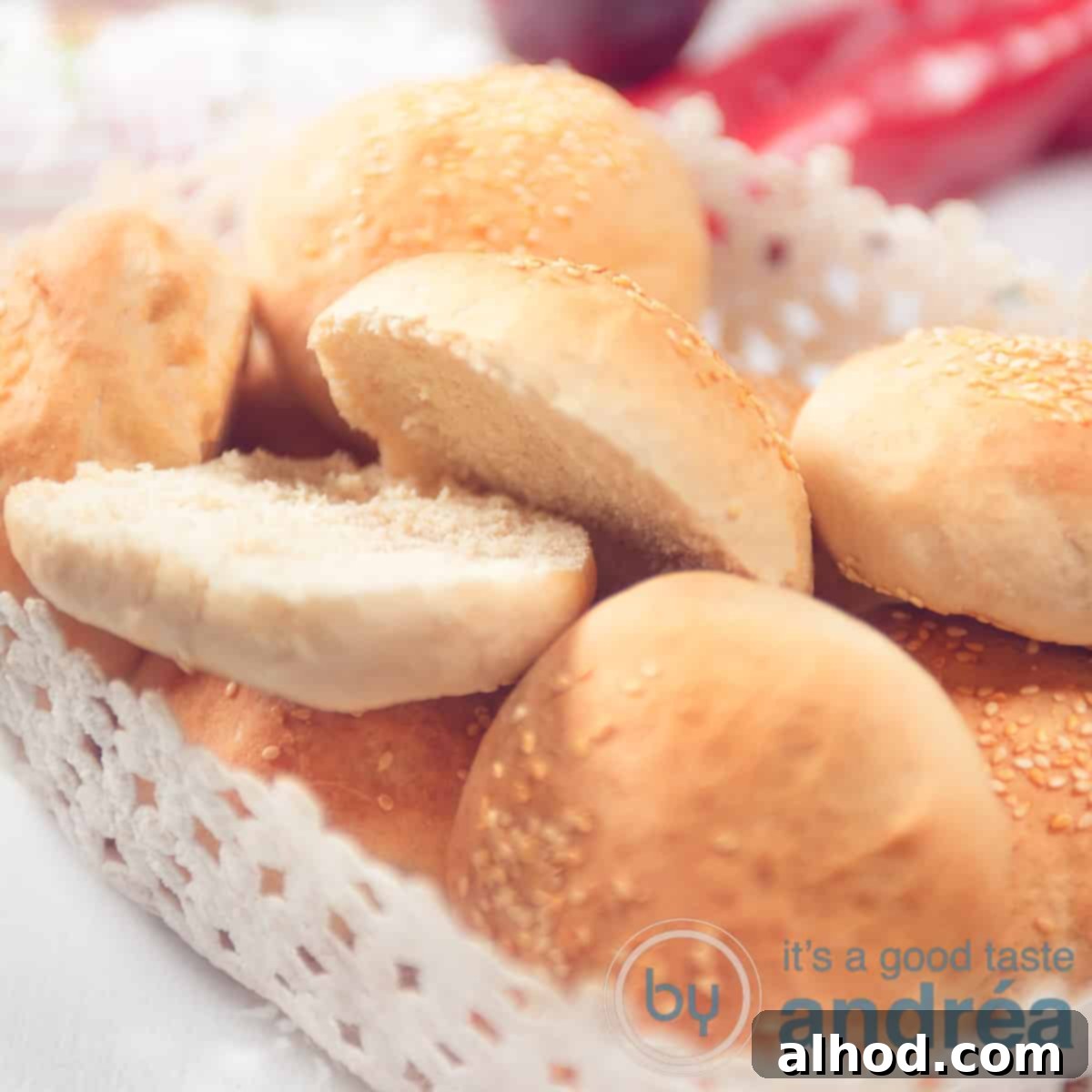
Master the Art of Homemade Hamburger Buns: Soft, Fluffy & Perfectly Golden with Sesame Seeds
There’s nothing quite like biting into a juicy, flavorful burger, and the foundation of any great burger is its bun. Forget dry, crumbly, or overly sweet store-bought options; this recipe will guide you through creating your own **homemade hamburger buns** that are incredibly soft, wonderfully airy, and boast a perfect crispy crust, all adorned with those classic sesame seeds. You’ll be astonished at how straightforward it is to achieve bakery-quality results right in your own kitchen. Whether you prefer the convenience of a bread machine (for the initial rise) or the satisfying process of kneading by hand, this recipe is designed for success. Prepare to elevate your BBQ game and enjoy every last bite of your homemade burger masterpiece!
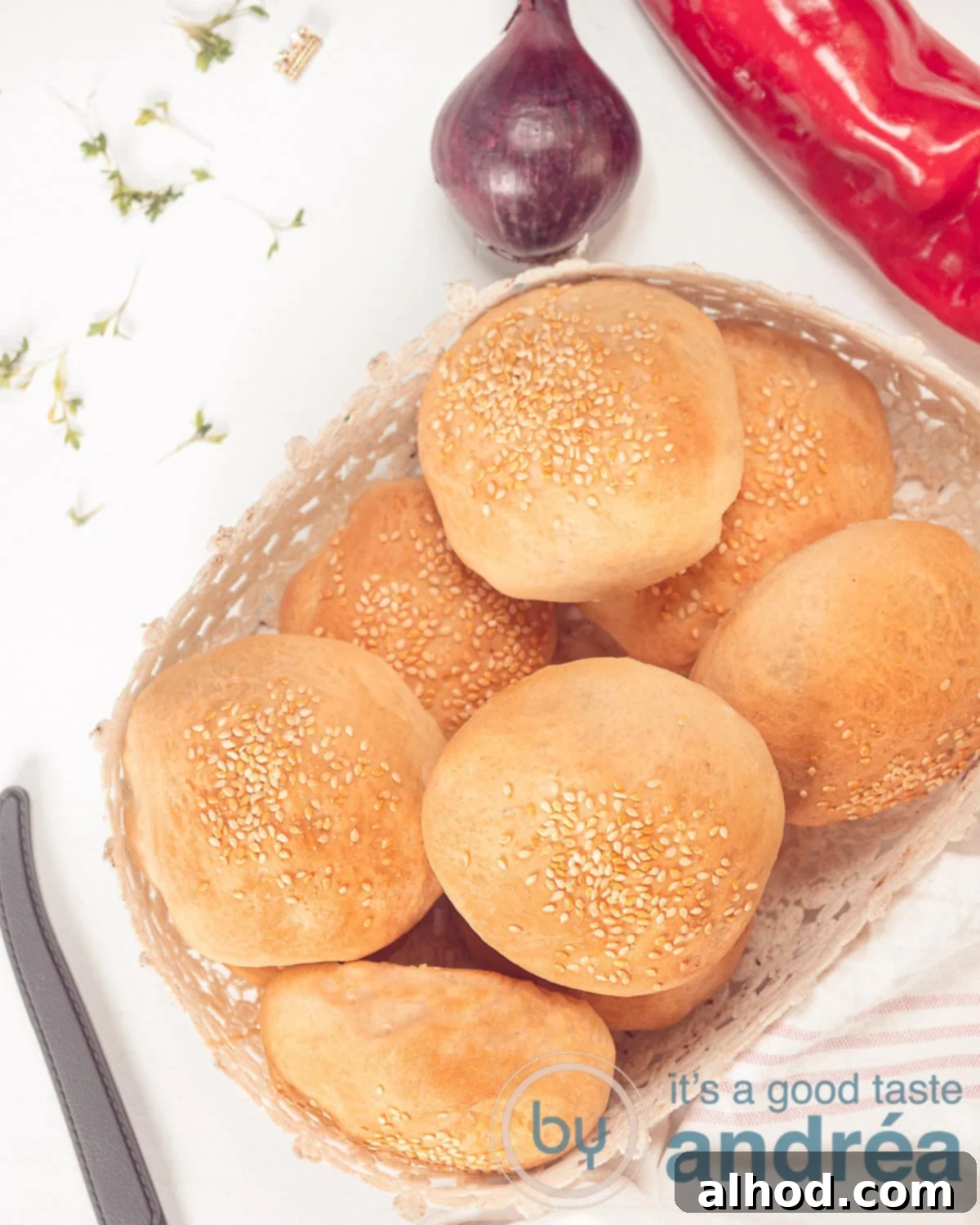
The Unrivaled Joy of Homemade Hamburger Buns
For me, a hamburger isn’t just a meal; it’s an experience. And a significant part of that experience is the bun. When I prepare a delicious burger, I love to serve it on a perfectly toasted bun, layered with crisp lettuce, ripe tomato, and an assortment of other mouth-watering toppings. Grilling the bun lightly before assembly adds an extra dimension of flavor and texture that truly makes the burger sing. But the secret to this perfect pairing lies undeniably in the quality of the bread itself.
The best hamburger buns are a symphony of textures: incredibly soft and fluffy on the inside, providing a gentle cradle for your burger patty, yet boasting a subtle crispiness on the outside, often enhanced by a sprinkle of sesame seeds. They should have a delicate, slightly sweet, and unmistakably fresh flavor that complements, rather than overpowers, your burger. And crucially, the recipe for these ideal buns shouldn’t be overly complicated; it should be easy and accessible for any home baker.
After numerous trials and passionate experiments in my kitchen, I’m thrilled to share what I believe to be the ultimate **burger bun recipe**! These buns rise beautifully, yielding an exceptional taste and a delightful freshness. Their golden-brown tops, adorned with fragrant sesame seeds, are not just a treat for the eyes but also a testament to their homemade perfection. Imagine sinking your teeth into these, fresh from the oven, on a warm summer day with a sizzling BBQ burger. Pure culinary bliss awaits!
This versatile recipe caters to all bakers. It’s perfectly suited for those who own a bread machine, which can handle the kneading and first rise with ease. Alternatively, if you enjoy the hands-on process, it’s just as effective for kneading by hand, allowing you to connect with your dough. No matter your method, the result will be consistently delicious.
Looking for some fantastic burger recipes to pair with your freshly baked buns? I’ve got you covered! Explore my special hamburger filled with feta, dive into the fresh flavors of an Italian Caprese burger, or try a delicious recipe for a homemade chicken burger! With so many delicious choices, your homemade buns will always have a gourmet partner.
Why Baking Your Own Hamburger Buns is a Game Changer
While store shelves are stocked with various burger bun options, none can truly compare to the experience of a homemade bun. Here’s why making your own is an absolute game-changer for your burger nights:
- Superior Flavor and Texture: Mass-produced buns often lack depth of flavor and tend to be either too dense or too flimsy. Homemade buns offer a rich, slightly sweet, and yeasty taste with a perfect balance of softness and chewiness on the inside, complemented by a subtle crispness on the crust.
- Freshness You Can Taste: There’s no substitute for bread that’s fresh from the oven. The aroma alone is enough to get your taste buds tingling, and the flavor is simply unparalleled.
- Control Over Ingredients: When you bake at home, you know exactly what goes into your food. You can avoid unwanted preservatives, artificial flavors, and excessive sugars or fats often found in commercial breads.
- Customization Options: Want to add a touch of garlic powder to the dough, or perhaps some onion flakes to the topping? Homemade allows for endless creativity. You can also experiment with different flours or seeds to tailor the buns to your preference.
- A Rewarding Baking Experience: The process of transforming simple ingredients into beautiful, delicious bread is incredibly satisfying. It’s a rewarding culinary project that yields tangible, delicious results.
Essential Ingredients for the Best Homemade Burger Buns
To embark on your journey to creating these irresistible **Homemade Hamburger Buns**, you’ll need a few key ingredients. Precision is important in baking, so ensure you have the correct amounts, which you can find detailed in the comprehensive recipe card at the bottom of this blog:
- Flour – For these light and airy buns, standard all-purpose flour works wonderfully. It provides a good balance of protein for structure without making the buns too chewy. If you prefer a slightly chewier bun, you could experiment with a higher protein bread flour, but for classic softness, all-purpose is your best bet.
- Yeast – This recipe utilizes two teaspoons of instant yeast, which can be directly mixed with dry ingredients and doesn’t require prior activation. If you opt for fresh yeast, you’ll need ½ oz (approximately 14 grams). For dry active yeast, two teaspoons are also sufficient. Remember: with both fresh yeast and dry active yeast, you must first dissolve them in lukewarm water (or milk, as per this recipe) for about 5-10 minutes until foamy. This “proofs” the yeast, ensuring it’s active and ready to make your dough rise.
- Salt – Salt is crucial for flavor, bringing out the subtle sweetness of the dough and balancing the overall taste. However, direct contact with yeast in large quantities can inhibit or even kill the yeast. To avoid this, we’ll first knead the dough lightly, then sprinkle the salt over it, and continue kneading until fully incorporated. This method ensures both proper yeast function and even salt distribution.
- Sugar – Beyond adding a touch of sweetness to the buns, sugar acts as vital food for the yeast, helping it activate and produce carbon dioxide more effectively. This process is what gives you that beautifully airy texture and contributes to the golden-brown color of the crust during baking.
- Sunflower Oil – Incorporating oil into your dough is a secret to achieving softer, more tender buns. It contributes to the dough’s elasticity and moisture, ensuring your buns stay fresh longer. You can easily substitute sunflower oil with other neutral-flavored oils like vegetable oil or canola oil.
- Milk – Using milk instead of just water adds richness and a delicate flavor to the hamburger buns. Furthermore, the fat content in milk helps to keep the buns softer and extends their freshness. It’s crucial to use the milk lukewarm (around 99 °F / 37 °C) to gently awaken the yeast. If the milk is too hot, it will kill the yeast, preventing your dough from rising; if it’s too cold, the yeast will be sluggish. For a dairy-free alternative, you can successfully use lukewarm water or plant-based milk (like almond or soy milk), though it might slightly alter the final flavor and richness.
- Egg – An egg in bread dough plays multiple roles: it enriches the flavor, contributes to a fluffier and softer crumb, and adds strength and structure, making the buns a bit firmer and easier to handle. It also gives the crust a beautiful golden hue.
- Sesame Seeds – While a plain bun is perfectly acceptable, sesame seeds are the iconic decoration for hamburger buns, providing a distinctive look, a subtle nutty flavor, and a pleasant textural contrast. You can also experiment with poppy seeds, everything bagel seasoning, or simply brush with an egg wash for a glossy finish.
Step-by-Step Guide: How to Prepare Soft Hamburger Buns
Creating these delightful hamburger buns is a rewarding process, and I’ve broken it down into clear, manageable steps. You’ll find a complete, printable recipe card with all the precise measurements and instructions at the very bottom of this blog post. This section provides a detailed walkthrough for both hand-kneading/mixer and bread machine methods, ensuring your success.

- Activate the Yeast: In a medium bowl (or directly in your stand mixer bowl), combine the lukewarm milk, sugar, and yeast. Stir gently and let it sit for about 5 minutes. You should see small bubbles forming on the surface – this is a good sign that your yeast is active and alive! If no bubbles appear, your yeast might be old or the milk temperature was off, and it’s best to start with a new packet of yeast. This crucial step ensures a successful rise.
- Initial Dough Mixing: Add the flour, the activated milk mixture, the egg, and the sunflower oil to your bowl. If using a stand mixer with a dough hook, mix on low speed for about 5 minutes until the ingredients are well combined and a shaggy dough forms. If kneading by hand, mix with a wooden spoon until it comes together, then turn it out onto a lightly floured surface.
- Salt Incorporation and Kneading: After the initial 5 minutes of mixing/kneading, sprinkle the salt evenly over the dough. Continue to knead for another 5 to 10 minutes (or longer, depending on your method) until the dough transforms into a soft, smooth, and elastic ball. A well-kneaded dough is key to a light and airy bun. You can perform the “windowpane test” (explained in our FAQ below) to check for proper gluten development.
- First Rise (Bulk Fermentation): Lightly brush a large bowl with oil. Place the kneaded dough into the bowl, turning it over once to coat all sides with a thin layer of oil. Cover the bowl snugly with a slightly damp tea towel and then with plastic wrap. This creates a warm, humid environment perfect for rising. Let the dough rise in a warm, draft-free place for approximately 1 to 1.5 hours, or until it has visibly doubled in size.
- Deflating and Dividing: Once risen, gently turn the dough out onto your clean work surface. Use your hands to gently press out the air, deflating it evenly. This step helps to create an even crumb structure. Divide the dough into nine equal pieces. For best accuracy, you can use a kitchen scale to ensure each piece weighs the same.
- Shaping the Buns: Take each piece of dough and form it into a smooth, tight ball. The goal is to create surface tension, which helps the buns hold their shape. Place the shaped balls onto a baking sheet lined with parchment paper, leaving ample space between them. Cover them again with a towel and let them rest for 15 minutes. After resting, gently flatten each ball with the palm of your hand to create the classic bun shape.
- Topping and Second Rise (Proofing): Lightly brush the tops of the flattened buns with a little water. This helps the sesame seeds adhere. Sprinkle generously with sesame seeds, gently pressing them into the dough. Cover the buns once more with a slightly damp towel and let them rise for a second time in a warm place for about 1 hour, or until they look noticeably puffy. This second rise is crucial for an incredibly light texture.
- Baking: Preheat your oven to 390 °F (200 °C) during the last 30 minutes of the second rise. Just before baking, you can lightly mist the buns with water from a spray bottle – this creates steam in the oven, contributing to a crispier crust. Bake for 15-18 minutes, or until the hamburger buns are beautifully golden brown and sound hollow when tapped on the bottom.
- Cooling: Once baked, immediately transfer the buns to a wire rack to cool completely. Cooling on a rack prevents the bottoms from becoming soggy and allows steam to escape, ensuring a perfect texture throughout. Resist the urge to cut into them immediately; patience will be rewarded with the best texture!
How do you check whether your dough is kneaded enough? (The Windowpane Test)
Checking your dough for proper kneading is vital; you want to avoid both under-kneading (which results in a dense bun) and over-kneading (which can make it tough). The best way to check for sufficient gluten development is with the “windowpane test.” To perform this, take a small ball of dough (about ½ inch diameter) and gently flatten it with your fingertips. Slowly and carefully stretch the dough outwards from the center, turning it a quarter turn in your hands as you stretch. Continue stretching and turning until you can see light passing through a thin, translucent membrane of dough, almost like a windowpane. If the dough tears before you achieve this thin membrane, it’s not quite ready, and you should continue kneading for another 2-3 minutes before testing again. Once it passes the windowpane test, your dough is perfectly kneaded and ready for its first rise.

Troubleshooting Common Hamburger Bun Issues
Even experienced bakers encounter challenges sometimes. Here are some common issues you might face when baking hamburger buns and how to address them:
- Buns Didn’t Rise: This is often due to inactive yeast. Ensure your yeast is fresh and that your milk is lukewarm (not too hot or too cold). Too much salt directly on the yeast can also kill it.
- Dense or Heavy Buns: If your buns feel heavy, it could be a sign of under-kneading (not enough gluten development), too much flour (making the dough stiff), or insufficient rising time (the yeast didn’t have enough time to create air pockets).
- Dry Buns: Over-baking is a common culprit for dry buns. Keep an eye on the oven and remove them once golden. Not enough fat (oil/butter) or liquid in the recipe can also contribute to dryness.
- Buns Spreading Too Much: If your buns flatten out excessively, it might mean the dough was over-proofed (risen too long) or that the gluten wasn’t developed enough during kneading. Shaping the balls tightly helps create surface tension to hold their shape.
- Sticky Dough: Dough can be sticky, especially initially. Avoid adding too much flour right away. Continue kneading; as gluten develops, the dough will become less sticky and more manageable. A light coating of oil on your hands can also help.
Serving & Storage Tips for Your Homemade Buns
Once your delectable homemade hamburger buns are cooled, they’re ready to embrace any filling you desire! Beyond classic beef burgers, consider them for:
- Grilled chicken or fish sandwiches
- Pulled pork or BBQ brisket sliders
- Veggie burgers or portobello mushroom sandwiches
- Breakfast sandwiches with egg, cheese, and bacon
Proper storage is key to enjoying your buns over time:
- Room Temperature: For optimal freshness, store your buns in a paper bag or an airtight container at room temperature for up to two days. A paper bag helps maintain a slightly crispy crust, while an airtight container keeps them softer.
- Refrigerator: Avoid storing homemade bread in the refrigerator. The cold temperature can cause the starch in the bread to retro-grade (stale) more quickly, leading to dry, hard buns.
- Freezer: For longer storage, the freezer is your best friend! Once completely cooled, place the buns in a freezer-safe bag or airtight container. They will stay fresh for up to 2 months. To prevent them from freezing together, place a small piece of parchment paper between each bun. This way, you can easily pull out and thaw only the amount you need at room temperature.
- To Re-Crisp/Reheat: To bring frozen or day-old buns back to life, lightly moisten the tops with a little water and heat them in a preheated oven at 390 °F (200 °C) for about 5 minutes. If you have an air fryer, 3 minutes at 390 °F (200 °C) will also do the trick, giving them a delightful warm and slightly crispy finish.
Did you make this delicious recipe? Tag #byandreajanssen via Instagram! I love to see what your creation looks like and regularly share the most beautiful photos of you! Did you like this recipe? Then leave a rating on the recipe card! Your feedback helps other home cooks and me enormously.
Need more inspiration?
- You can find video recipes on my YouTube channel.
- And don’t forget to save the recipes on Pinterest, so you can easily find them again next time!
📖 Recipe
VIDEO
RECIPE CARD

 Andréa
Pin Recipe
Equipment
-
A conventional oven is used. When using a convection oven (with air fan) decrease the temperature with 30 °F / 20 °C
-
Hand Mixer optional
-
Bread baking machine optional
-
Baking tray
-
Parchment paper
Prevent your screen from going dark
Ingredients
- 1¼ cup milk
- 2 teaspoons sugar
- 2 teaspoons yeast, instant
- 4 cups all-purpose flour
- 1⅔ tablespoons sunflower oil
- 1 egg, size M, room temperature
- 1¼ teaspoon salt
- sesame seeds
All my recipes are written both in Metric (gram / ml) and US Customary (cups / pounds). Here you can select which type of amount you would like to see.
Instructions
In the bread baking machine
-
In the bread-making machine, you first add the wet ingredients: milk, sunflower oil, and egg to the bowl. Then you sprinkle the flour on top. Spoon the yeast into one corner of the bowl and the salt into the opposite corner. In the middle, add the sugar.4 cups all-purpose flour, 2 teaspoons yeast, 1¼ teaspoon salt, 1⅔ tablespoons sunflower oil, 1 egg, 1¼ cup milk, 2 teaspoons sugar
-
Start the bread baking machine at its dough program (kneading and first rise). Take the dough out of the bowl and put it on the work surface. Push the air out.
By hand or mixer
-
Warm the milk until it’s lukewarm (99 °F / 37 ·C).1¼ cup milk
-
Add the sugar and yeast.2 teaspoons sugar, 2 teaspoons yeast
-
Let it stand for 5 minutes. Bubbles should appear on the surface. If they won’t, your yeast isn’t working anymore, and you should start with new yeast.
-
Put the flour in a bowl and add the milk mixture, oil, and egg.4 cups all-purpose flour, 1⅔ tablespoons sunflower oil, 1 egg
-
Knead for 5 minutes, then sprinkle the salt on top.1¼ teaspoon salt
-
Knead further for another 5 minutes until the dough becomes soft and elastic. (* see notes)
-
Oil a bowl and put the dough in. Turn around once.
-
Cover with a slightly wet towel and wrap plastic foil over the towel.
-
Put in a warm environment for about 90 minutes. The dough should be doubled by then.
-
Put the dough in front of you on your working surface and press the air out of the dough with your hands.
After the first step with the bread baking machine or kneading by hand or mixer.
-
Place the parchment paper on the baking plate.
-
Divide the dough into nine equal pieces and make a ball from each piece.
-
Place the balls on the baking sheet. Cover with a towel and let the dough rest for 15 minutes. Press the balls with a flat hand.
-
Brush the top with water and sprinkle the sesame seeds on the bun.sesame seeds
-
Press the seeds a bit and put a towel over the bread.
-
Let the burger buns rise for 1 hour.
-
Turn on the oven for the final 30 minutes, so it can pre-heat to 390 °F (200 °C).
-
Spray the buns with water from a spray bottle and slide them into the oven.
-
Bake for 15 minutes until brown. Allow the bread to cool on a wire rack.
Notes
2. Salt – Adds flavor to the hamburger buns. But watch out with yeast, as salt can kill the yeast if it comes into contact in large amounts. That is why you knead the dough lightly, distribute the salt over the dough and knead further.
3. How do you check whether your dough is kneaded enough?
Check the dough because you don’t want to under-knead or over-knead. You do that by pulling a fleece. Next, flatten a small ball (about ½ inch diameter) of dough. Stretch the dough slightly, turn it in your hands a quarter turn and turn again. Then stretch the dough again and turn it a little again. Do this until a thin membrane (which you can see your fingers through) is formed (you cannot do this in one go). If the dough tears before you see a thin membrane, it is not good yet, and you knead it for another 2 minutes. Then let the dough rise.
4. Oven – When you use a conventional oven, set the temperature to 390 °F (200 °C). In a convection oven, 350 °F (180 °C) is enough. If you can choose, use the conventional setting.
5. Storage
- Room temperature – You can store the sandwiches in a (paper) bag at room temperature for up to two days.
- Refrigerator – Do not keep the sandwiches in the fridge. Due to the high humidity, the bread rolls become moist.
- Freezer – Freeze the sandwiches in a freezer bag or container. This way, they stay good for up to 2 months. Thaw the buns at room temperature. Tip: Place baking paper between the buns. This way, they don’t freeze together, and you can remove and thaw precisely the required number of hamburger buns from the packaging.
- To crisp up again: Moisten the tops of the buns and heat them in an oven at 390 °F (200 °C) for 5 minutes (or 3 minutes at 390 °F / 200 °C in the Air fryer).
6. The nutritional value shown is per homemade hamburger bun.
Nutrition
Tried this recipe?
Let us know how it was!
More Delicious Bread Recipes to Try
- Sweet Pull-Apart Christmas Tree Buns
- Homemade Nutella Twist Bread
- Cranberry buns
- Cinnamon Star Bread Recipe